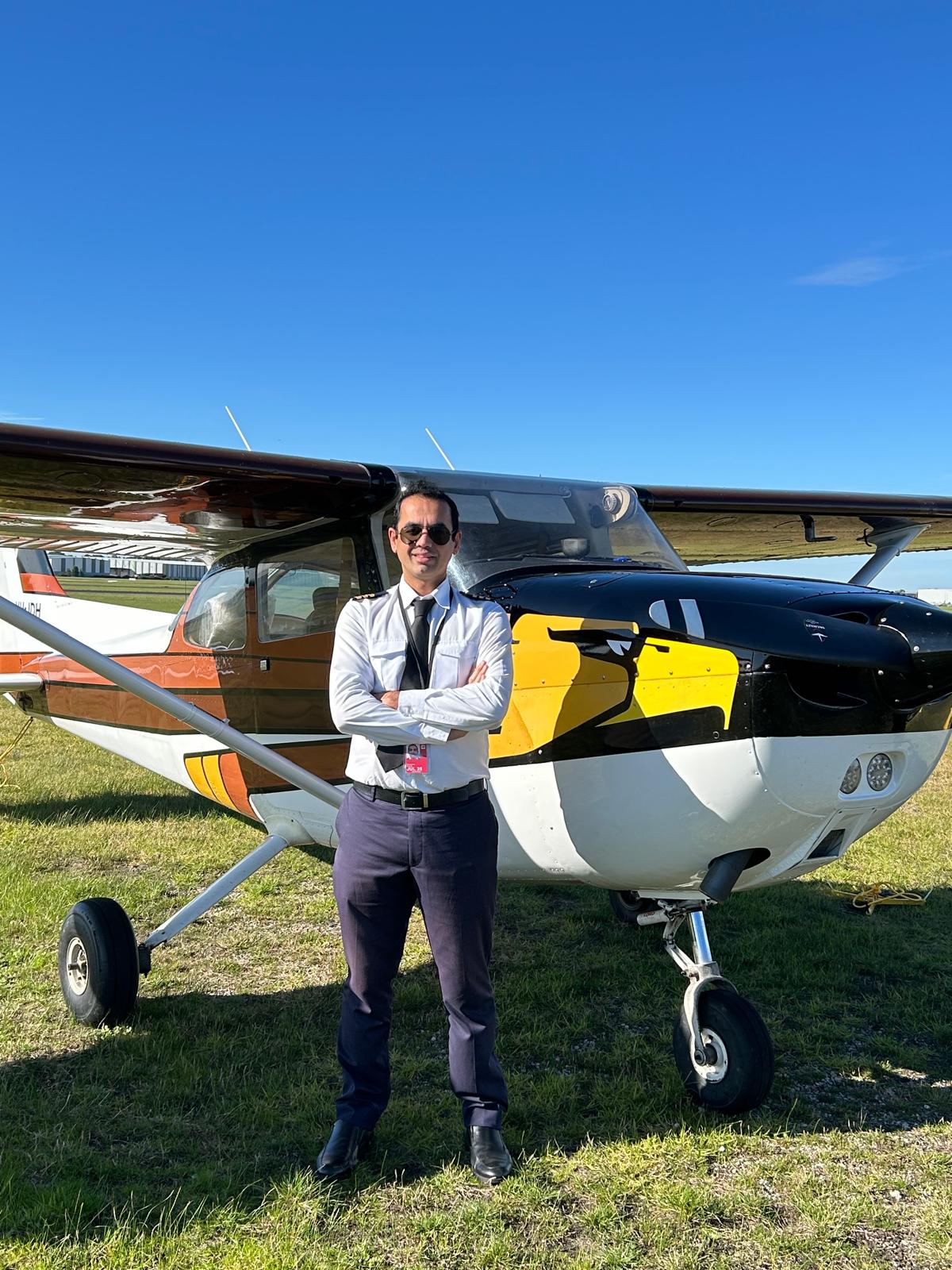
Imagine lining up on the runway for the first time. The hum of the engine fills the cabin, and the horizon stretches endlessly ahead. For thousands of Australians every year, that moment stops being a daydream. It becomes a reality because they decided to take the leap.
But let’s be honest. Getting to that point can feel incredibly overwhelming.
When you first look into how to get a pilot licence in Australia, you are instantly hit with a wall of aviation jargon, complex legal acronyms, and conflicting advice. Between navigating CASA regulations, figuring out medical requirements, and deciphering the real costs without hidden fees, it is easy to see why many aspiring aviators stall out early.
Worse yet, many students end up at large “pilot factories”. They are treated like a number and paired with a different instructor every week.
It shouldn’t be that hard to get started. The skies are completely accessible if you have a clear, honest road map.
This guide cuts through the regulatory noise. It gives you a transparent and realistic breakdown of everything you need to know about how to become a licensed pilot. This includes licence types, eligibility criteria, costs, timelines, and how to choose a supportive flight school.
What Is a Pilot Licence?
A pilot licence is an official certification issued by the Civil Aviation Safety Authority (CASA). It allows an individual to legally operate an aircraft and is a key step to become a pilot.
Similar to a driver’s licence, it confirms your ability to safely operate an aircraft after completing required flight training, passing examinations, and demonstrating the skills needed to fly safely.
In Australia, pilot licences are designed to match different aviation goals and experience levels, whether for recreational flying, cross-country travel, or a professional aviation career.
To obtain a pilot licence, students complete practical flight training, aviation theory studies, medical requirements, and flight assessments. All pathways ensure pilots can operate aircraft safely and responsibly within Australia’s aviation system.
A pilot licence is more than just a qualification. It represents a lifelong commitment to safety, discipline, and continuous learning.
Why Is a Pilot Licence Required to Fly an Aircraft?
Flying an aircraft involves far more than simply taking off and landing. Pilots must understand complex weather conditions, airspace regulations, aircraft systems, navigation, emergency procedures, radio communication, and risk management.
A pilot licence ensures that anyone operating an aircraft has the required knowledge and skills. These skills help protect the pilot, their passengers, and other airspace users.
Australia has one of the world’s safest aviation systems. Licensing plays a critical role in maintaining these high safety standards.
Through structured training and assessment, student pilots learn how to make informed decisions and manage changing conditions. They also learn to operate strictly within CASA regulations.
A pilot licence is also legally required for most forms of powered flight. Under Australian aviation regulations, operating an aircraft is prohibited unless you hold the appropriate licence, rating, or student pilot authorisation.
The licensing process provides assurance that pilots have demonstrated competency in both normal and emergency situations. This must be achieved before they are granted the privileges of independent flight.
Beyond regulatory compliance, obtaining a pilot licence builds true confidence and competence. The structured learning process helps aspiring pilots develop sound judgement and practical flying skills. It also builds the discipline required to operate safely in a dynamic aviation environment.
Types of Pilot Licences in Australia – The Pilot Licence Pathway Explained
Before you book your first lesson, it helps to understand what you’re working towards. The Civil Aviation Safety Authority (CASA), Australia’s aviation regulator, issues several levels of pilot certification, each suited to different goals.
Recreational Pilot Licence (RPL) – Your Entry Point
The Recreational Pilot Licence (RPL) is the entry point for many Australian student pilots. It allows you to fly a single-engine aircraft within 25 nautical miles of your departure aerodrome. You can also fly further with additional endorsements.
You can carry up to 3 passengers, depending on your medical certificate and aircraft seating capacity. This makes the RPL ideal if leisure flying is your goal. It is also suitable if you want to get airborne without committing to the full PPL pathway immediately.
Private Pilot Licence (PPL) – Your Driver’s licence of the sky
The Private Pilot Licence (PPL) is the most popular milestone for aspiring aviators. It allows you to fly a wider range of aircraft, carry passengers, and navigate across Australia. However, it does not permit flying for hire or reward.
Think of it as your full driver’s licence of the sky. It also serves as the essential foundation for anyone aiming toward a professional commercial career.
Commercial Pilot Licence (CPL) – Flying Professionally for Pay
The Commercial Pilot Licence (CPL) allows you to fly professionally for hire or reward. It opens the door to diverse career opportunities, including roles as a charter pilot, flight instructor, aerial survey operator, or regional airline first officer.
Achieving your CPL requires a significant step up in training and experience. It demands substantially more flight hours and advanced theoretical knowledge than a PPL.
Air Transport Pilot Licence (ATPL) – The Pinnacle of Aviation
The Air Transport Pilot Licence (ATPL) is the highest level of pilot licensing. It is legally required to act as pilot in command of an airliner.
It is a demanding journey, but for many, it represents the ultimate aviation destination.
However, most aspiring pilots begin with foundational training. For that reason, the rest of this guide focuses on the RPL and PPL pathways.
Recommended Read: From RPL to PPL in Melbourne: Understanding Australia’s Pilot Training Pathway
Eligibility Requirements for a Pilot Licence in Australia
According to CASA’s official licensing documentation, the eligibility requirements for a PPL in Australia include:
- Age: You must be at least 17 years old to hold a PPL (and at least 16 for an RPL).
- Medical: You need a current Class 2 or Basic Class 2 Aviation Medical Certificate (or Class 1 for a CPL/ATPL). These are issued or assessed by a CASA-approved Designated Aviation Medical Examiner (DAME) or a qualified GP.
- English Language Proficiency: You must demonstrate ICAO-compliant Aviation English Language Proficiency (AELP) to handle international radio communication standard procedures.
- Flight Hours: A minimum of 40 hours of total flight time is required for the PPL, which must include a minimum of 10 hours of solo flight time and 5 hours of solo cross-country navigation.
- Theory Exams: You must pass a single, integrated CASA aeronautical knowledge exam covering core subjects such as air law, navigation, meteorology, and aircraft general knowledge.
The medical requirement is worth addressing early. Some aspiring pilots worry that a pre-existing health condition might disqualify them. In many cases, conditions that would restrict you from obtaining a commercial Class 1 medical are entirely compatible with a private Class 2 or Basic Class 2 certificate.
Always check with a DAME or an authorised practitioner before making assumptions. CASA’s medical guidance on this topic is highly transparent and accessible at casa.gov.au.
Step-by-Step Process to Get a Pilot Licence in Australia
Here’s a practical breakdown of how the journey typically unfolds, including realistic timelines and costs.
Step 1: Get Your Aviation Medical (Week 1–2)
Book an appointment with a Designated Aviation Medical Examiner (DAME). A Class 2 medical typically costs between $400–$500 once you factor in the DAME consultation, CASA processing fees, and mandatory baseline checks (like an ECG or audio test). Do this first; there’s no point investing heavily in training if there is an underlying medical issue to address.
Step 2: Obtain an ARN and Apply for an ASIC (Week 1–2)
Before you can sit theory exams or fly solo, you’ll need an Aviation Reference Number (ARN) from CASA. It’s free and straightforward to apply for online through the myCASA portal. At the same time, apply for your Aviation Security Identification Card (ASIC). This mandatory security background check costs around $250–$300 and can take up to 6 weeks to clear, you must have it before your first solo flight.
Step 3: Enrol in a Flight School and Begin Training (Months 1–12+)
This is where the real adventure begins. You’ll start with dual instruction flights alongside a certified instructor, learning the fundamentals of aircraft control, take-offs, landings, and emergency procedures. Alongside your flight training, you’ll study for your theory exam. Most flight schools Australia-wide offer integrated ground school programs, either in-person or online.
Step 4: Your First Solo Flight (Around Hour 15–20)
Your first solo flight is a defining, unforgettable milestone. Once your instructor is completely confident in your abilities, usually tracking between 12 and 20 hours of training, you will take to the skies completely alone. It’s a legendary rite of passage that stays with you for life.
Step 5: Pass the Official Theory Exam
To gain your PPL, you must pass the single, comprehensive CASA aeronautical knowledge exam at an approved in-person testing centre. The test requires thorough preparation across multiple core units, including air law, navigation, meteorology, human factors, and aircraft general knowledge.
Step 6: Cross-Country Solo and Final Flight Test (Months 6–12)
After building solo hours, you will progress to advanced cross-country navigation training. Once you complete a solo navigation exercise spanning multiple airports, you’ll sit the PPL flight test with a CASA-approved flight examiner. Pass, and your licence is yours.
How long does it take to get a pilot licence in Australia?
For a motivated student flying consistently (two to three times per week), the PPL can be achieved in 6–12 months. Part-time students may take 12–24 months. While the minimum legal requirement is 40 hours, the national average sits closer to 60–70 flight hours before students reach test standards, so plan your timeline accordingly.
Real Pilot Licence Costs in Australia (PPL Budgeting):
Total PPL costs in Australia typically range from $30,000 to $38,000 or more. The final cost depends on factors such as the aircraft type, training location, and how quickly you progress through the course.
For example, training in a traditional analogue aircraft is often less expensive than training in a modern glass cockpit aircraft.
This comprehensive budget includes dual and solo aircraft hire, instructor fees, landing fees, and aviation charts. It also covers theory materials, exam fees, and the final flight test fee.
Choosing the Right Flight School in Australia for Your Training
Not all flight schools are equal, and choosing the right one can meaningfully affect both your experience and your progress speed. Here’s what to look for:
- CASA-approved organisation: Confirm the school is a registered training organisation (RTO) or approved under CASA’s Part 141/142 regulations.
- Fleet condition and variety: Well-maintained, modern aircraft matter for both safety and learning efficiency.
- Instructor experience and culture: A good instructor-student relationship accelerates learning. Ask about instructor turnover and student completion rates.
- Location and airspace: Training near controlled airspace gives you exposure to radio communication and real-world procedures earlier in your training.
- Reviews and graduate outcomes: Speak to former students if possible, and look for schools with transparent pricing and structured syllabi.
When comparing flight schools, consider factors such as instructor experience, aircraft availability, scheduling flexibility, and the training environment itself. For example, Goldwings Aviation Australia is a CASA-certified flight school based at Moorabbin Airport, Melbourne, offering personalised RPL and PPL training with structured lesson plans and one-to-one instructor support. Training in a controlled-airspace environment can provide students with valuable exposure to real-world aviation operations from the beginning of their journey.
Why Choose Goldwings Aviation Australia as Your Flight School in Melbourne?
Choosing the right flight school is one of the most important decisions you’ll make as a student pilot. The quality of instruction, training environment, and level of support you receive can have a significant impact on your confidence, progress, and overall flying experience.
At Goldwings Aviation Australia, we focus on providing personalised flight training designed to help students achieve their aviation goals safely and efficiently.
Key Advantages of Training with Us
- CASA Part 141-Certified Fight School: Train with confidence under CASA-approved training standards, structured programs, and a strong safety culture.
- Personalised One-to-One Instruction: Tailored lessons that adapt to your unique learning style and pace, building confidence in a structured, supportive environment.
- Experienced CFI Leadership: Guided by Chief Flying Instructor Muhammad Khalid, ensuring consistent, high-quality mentorship for a smoother path to your licence.
- Prime Location at Moorabbin Airport (YMMB): Gain critical, real-world experience from day one by training in controlled airspace with active ATC communications and diverse traffic.
- Flexible & Transparent Pricing: Balance your training with life commitments through flexible scheduling and a manageable, pay-as-you-fly approach.
- Focused RPL and PPL Pathways: Specialised programs for Recreational Pilot Licence and Private Pilot Licences that instill strong foundational skills and safe habits from the start.
Whether you’re learning to fly for recreation, personal travel, or as the first step toward a professional aviation career, Goldwings Aviation provides a supportive training environment to help you become a confident and capable pilot.
Why Your Training Environment Matters
The environment where you learn to fly plays a major role in developing your skills, confidence, and decision-making ability as a pilot. Beyond your instructor and aircraft, factors such as airspace complexity, traffic volume, and airport operations can significantly influence the quality of your training experience.
Students who train in active aviation environments gain valuable exposure to real-world procedures, air traffic control communications, navigation planning, and situational awareness from the very beginning of their journey.
At Goldwings Aviation Australia, students train at Moorabbin Airport (YMMB), one of Australia’s busiest and most respected general aviation airports. With controlled airspace, professional ATC services, multiple runways, and diverse aircraft traffic, Moorabbin provides an excellent environment for building practical flying skills.
Combined with personalised one-to-one instruction and structured training programs, this real-world experience helps students become safe, confident, and capable pilots, whether their goal is earning an RPL, obtaining a PPL, or pursuing a future aviation career.
Professional Career Opportunities After Getting Licensed in Australia
A PPL is just the beginning of your aviation journey. From there, pilots can pursue advanced ratings and endorsements to open up new aircraft complexities and missions. The structured pathway from a PPL to a Commercial Pilot Licence (CPL), and ultimately an Air Transport Pilot Licence (ATPL), is highly defined under Australian regulations.
Career options for licensed pilots in Australia include:
- Flight Instructor: One of the most common and rewarding entry-level professional roles to build critical flight hours.
- Charter Pilot: Commanding scenic flights, outback community supply routes, or corporate business charters.
- Agricultural / Aerial Application Pilot: Conducting low-level crop dusting, firebombing, or specialized rural operations.
- Aerial Survey and Mustering: Flying low-level tracking missions or gathering geographical data across remote regions.
- Regional Airline First Officer: Progressing into regional networks by combining a CPL with a Multi-Engine Command Instrument Rating (MECIR).
- Major Airline Pilot: The ultimate destination, typically requiring a full ATPL and extensive multi-crew experience before achieving jet command. (typically, 3,000–5,000+ hours before airline recruitment)
Australia continues to face a well-documented pilot shortage, particularly across regional networks. According to global aviation industry forecasts from leading organizations like Boeing and CAE, the Asia-Pacific region alone will require over 240,000 new commercial pilots over the coming decades. Consequently, Australian-trained pilots remain highly regarded and actively sought after on the international market.
Ready to Take the First Step?
The path from curious beginner to licensed pilot is more achievable than most people realise, it just requires the right information, the right school, and the commitment to see it through. Australia’s aviation community is welcoming, the skies are extraordinary, and the sense of freedom that comes with holding a pilot licence is genuinely hard to describe.
If you’re considering pilot training in Melbourne, Goldwings Aviation offers personalised RPL and PPL training at Moorabbin Airport with flexible scheduling, structured lessons, and one-on-one guidance from experienced instructors. Book a school tour to learn more about starting your aviation journey.
FAQs About Pilot Licence in Australia
Can I learn to fly with no prior experience?
Absolutely. Flight schools are structured specifically for complete beginners. Your very first lesson is typically a Trial Introductory Flight (TIF), where you will get hands-on time manipulating the aircraft controls alongside an instructor right away.
What is the minimum age to get a pilot licence in Australia?
You can begin flight training at any age. However, you must be at least 15 years old to fly solo, 16 to hold a Recreational Pilot Licence (RPL), and 17 to hold a Private Pilot Licence (PPL). There is no upper age limit, provided you can maintain a valid aviation medical certificate.
How much does it cost to get a pilot licence in Australia?
A realistic budget for a PPL ranges between $30,000 and $38,000+. While the legal minimum is 40 hours, the national average sits closer to 60–70 flight hours before reaching test standard. Your total cost will depend on the aircraft type, location, and your lesson frequency, so always ask schools for a comprehensive, upfront estimate that includes fuel levies and landing fees.