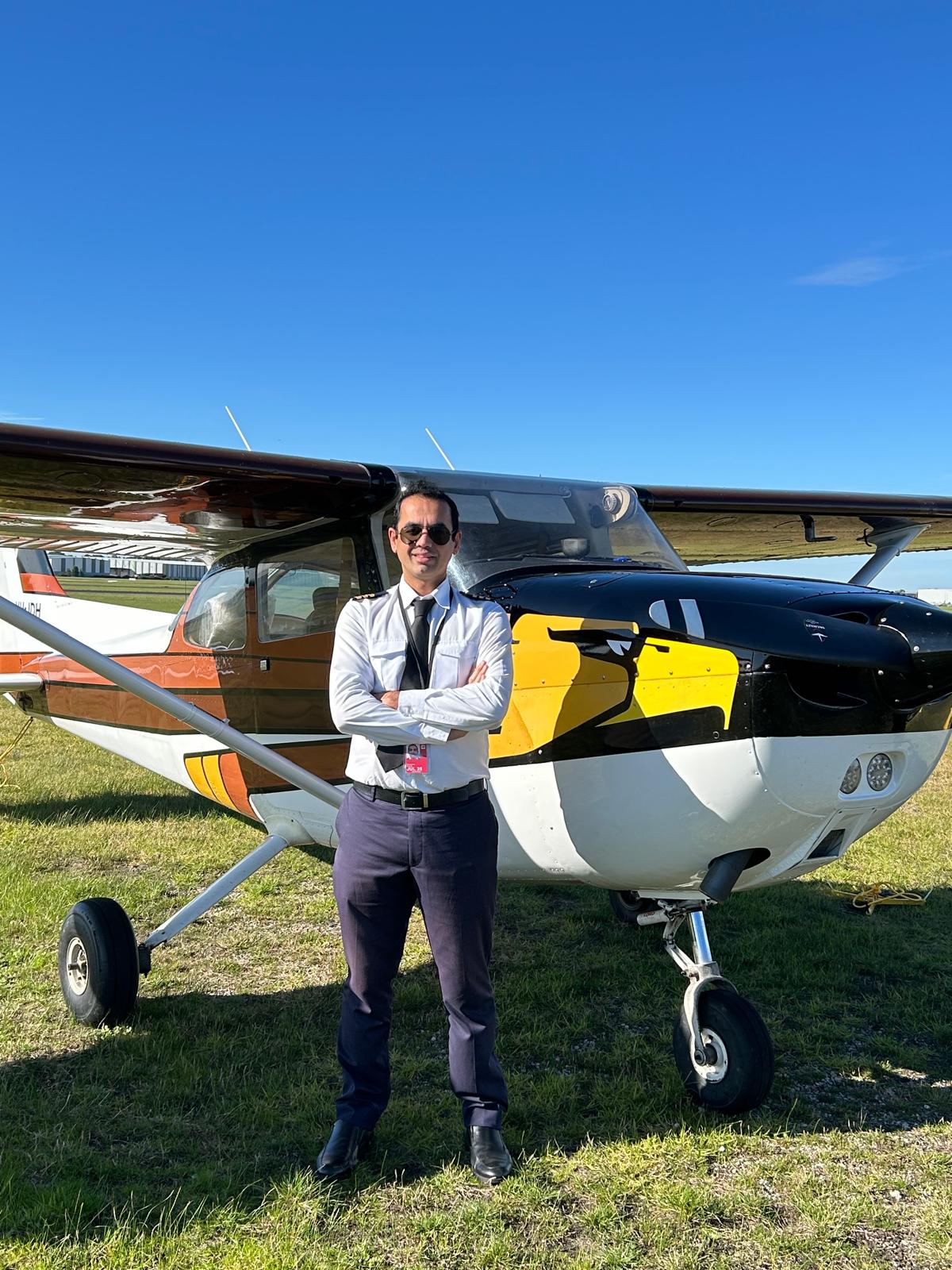
Picture this: you’ve just earned your wings. The feeling is completely indescribable. You’ve logged your hours, survived the stressful flight test, passed your exams, and your Private Pilot Licence (PPL) is finally in your hand.
Naturally, your mind starts to wander beyond Australian skies, beyond the coastline, and across international borders. Maybe it’s a flight over the Tasman to New Zealand. Maybe it’s island-hopping toward Bali. Maybe it’s just the absolute thrill of the idea itself.
This leads to the ultimate question every ambitious new pilot eventually asks: can I fly internationally with an Australian PPL?
The short answer is yes. It is entirely possible, but it is not as simple as filing a flight plan and taking off. There are major international frameworks, strict aircraft equipment demands, and real-world training limitations you need to understand first.
Let’s break down exactly what the rules say and how you can prepare to take your skills across borders.
What Does a Private Pilot Licence Actually Allow You to Do?
A Private Pilot Licence, issued by the Civil Aviation Safety Authority (CASA), gives you the legal right to act as pilot-in-command (PIC) of a registered aircraft, but strictly for non-commercial purposes (no flying for profit). That means you can fly yourself, your friends, or your family, as long as you’re not charging for it.
According to CASA, a PPL allows you to fly single-engine aircraft under Visual Flight Rules (VFR), primarily during daylight hours and in good weather conditions. You can also carry passengers, which makes it a practical and exciting qualification for personal travel.
So, in theory, yes, you have a licence to fly. But whether that licence takes you internationally is a different story.
The ICAO Framework: How Australian Licences Work Overseas
To understand how an Australian licence behaves overseas, you have to look at global aviation laws. Internationally, pilot licences are governed by the International Civil Aviation Organization (ICAO), a United Nations agency that sets uniform global standards.
Because Australia is a member state of the Chicago Convention (which established ICAO), a standard Australian PPL is recognized as an ICAO-compliant licence.
The Foreign Recognition Catch: Under ICAO rules, a pilot licence issued by one country is not automatically a blanket passport to fly any aircraft worldwide. Each individual country reserves the right to decide how they validate or convert foreign qualifications.
If you want to fly internationally, you generally have two choices:
- Fly an Australian-Registered (VH-) Aircraft: If you take off from Melbourne in a VH-registered plane, your Australian PPL is completely legal to operate that aircraft anywhere in international airspace, provided you comply with local entry laws.
- Fly a Foreign-Registered Aircraft: If you travel to the USA or New Zealand and want to rent a local aircraft (e.g., an N-registered or ZK-registered plane), you cannot just hop in. You must first apply to that country’s aviation authority (like the FAA or CAA NZ) to have your Australian PPL validated or issued as a temporary local private licence.
CASA Rules for Leaving Australian Airspace
Before you even land somewhere else, you have to leave Australia, and that comes with its own set of rules.
Flying internationally from Australia requires you to:
- File an international flight plan: This must be submitted in the official ICAO format through Airservices Australia.
- Carry Certified Aircraft Documentation: You must have the original Certificate of Registration and Certificate of Airworthiness on board.
- Hold a Valid Medical: A current CASA Class 2 or Class 1 Medical Certificate is mandatory.
- Possess Customs & Border Clearances: You must depart from and land at designated international customs airports, holding valid passports and visas for everyone on board.
- Equip for Overwater Operations: Because leaving the Australian mainland to reach neighboring nations requires flying vast distances over the ocean, specialized survival equipment is legally mandated under CASA Part 91 general operating rules. To safely manage extended overwater operations, your aircraft must be fitted with a life raft, an Emergency Locator Transmitter (ELT), life jackets for all occupants, and emergency survival rations.
It’s also worth noting that most PPL holders fly light single-engine aircraft, not the most ideal setup for crossing oceans. Range, weather endurance, and instrument capability all become critical factors when you’re flying beyond the horizon.
Key Limitations of a PPL for International Travel
Even if you tick all the regulatory boxes, there are real-world limitations to be aware of:
- No Instrument Flight Rules (IFR): A standard PPL is VFR only. International routes often require IFR capability, especially when flying through areas with variable weather or controlled airspace.
- No commercial operations: You cannot charge passengers for fuel, landing fees, or anything else. The flight must be 100% private and non-commercial.
- Aircraft limitations: Most light aircraft used for PPL training aren’t equipped or certified for extended overwater operations or the demanding conditions of international airspace.
- Foreign licence recognition: Not every country will accept your Australian PPL at face value. Some may require conversion, local exams, or additional endorsements before you can act as PIC.
These limitations don’t make international flying impossible, but they do make it clear that a PPL is really the beginning of your personal aviation journey, not the destination.
Read: A Complete Step-by-Step Guide to Becoming a Pilot in Melbourne
Key Limitations of a Standard PPL
While the law allows international flights, standard PPL privileges come with massive practical limitations that make long-distance blue-water crossings incredibly difficult for beginners.
| Limitation Category | What the CASA/ICAO Rule States | Real-World Training Impact |
| Medical Certification | Standard Class 2 or Class 1 Medical required. Under global ICAO frameworks, a Basic Class 2 Medical or a RAMPC is not valid for international flights | To fly solo navigation legs or cross international borders, you must pass a comprehensive medical examination with a CASA-approved Designated Aviation Medical Examiner (DAME). |
| Weather & Operations | Visual Flight Rules (VFR) only by default. You are limited to flying during clear daylight hours with distinct visibility. | If you encounter unexpected cloud cover, sea fog, or deteriorating weather over open water, you cannot legally or safely proceed without an advanced Instrument Rating (IR). |
| Aircraft Range | Standard training aircraft (e.g., Cessna 172) have an average range of 4 to 5 hours. | Australia is geographically isolated. Safely island-hopping or crossing the Tasman requires detailed fuel planning and reserves that often exceed the performance baselines of basic single-engine fleets. |
| Financial Rules | Strictly non-commercial. You are legally prohibited from flying for a profit or charging commercial hire fees. | The Cost-Sharing Rule: You cannot be paid for your piloting services. However, CASA allows you to split direct flight costs (fuel, oil, and landing fees) completely evenly among passengers, up to a maximum of 6 seats. |
Progressing Beyond a PPL and Preparing for International Flying
If your ultimate dream is to explore the globe from the cockpit, you shouldn’t view your PPL as the final destination, it’s simply your foundational launchpad. To safely and confidently fly long distances, building advanced ratings is highly recommended.
Advanced Qualifications and Ratings
Australian pilots commonly build their capabilities through the following qualifications:
- Night VFR Rating: Extends your flying privileges into night operations and provides valuable experience in more challenging conditions.
- Instrument Rating (IR): Allows you to fly in Instrument Meteorological Conditions (IMC) and navigate primarily by reference to instruments, making it a crucial qualification for long-distance and international flying.
- Commercial Pilot Licence (CPL): Opens opportunities for professional flying and provides access to more advanced aircraft operations.
- Multi-Engine Rating: Qualifies you to operate twin-engine aircraft, which are often better suited to longer-range and overwater international flights.
Crucial Preparation for International Flight Operations
Whether flying privately or professionally, international operations demand a higher level of planning and knowledge. Experienced pilots typically focus on:
- Advanced navigation and cross-country flight planning
- Understanding international aviation regulations and airspace requirements
- Radio telephony procedures, including ICAO-standard phraseology
- Fuel planning, reserves, and alternate airport selection
- Customs, immigration, and border-entry requirements for aviation arrivals
Many pilots also undertake additional training, mentoring, or supervised long-distance flights to build confidence and practical experience before attempting their first international journey.
By combining advanced ratings with thorough preparation, pilots can progressively expand their operating capabilities and safely undertake international flights with greater flexibility, confidence, and professionalism.
The CASA website provides detailed information on each of these pathways, including the experience requirements, medical standards, and testing procedures involved.
What an International PPL Flight Involves
A typical cross-border private flight from Australia requires meticulous preparation and follows a strict operational sequence:
- Pre-Flight Planning and Weather Briefing: Checking long-range meteorological forecasts, calculating fuel reserves, and mapping out remote routing legs.
- Filing an International Flight Plan: Submitting mandatory flight notifications to Airservices Australia and foreign aviation authorities before departure.
- Domestic Customs and Border Clearances: Landing at a designated Australian international airport (such as Melbourne Tullamarine, Sydney, or a northern jumping-off point like Darwin) to complete mandatory immigration, customs, and passport controls before exiting national airspace.
- En-Route Air Traffic Control Communications: Maintaining active, professional radio communication with Airservices Australia and transitioning smoothly to foreign ATC units over international waters.
- Destination Entry and Customs Clearance: Landing at an approved international point of entry in the destination country to clear foreign customs, biosecurity, and immigration checkpoints.
- Foreign Aviation Authority Compliance: Adhering strictly to the local airspace rules, operational regulations, and local landing procedures of your host nation.
Each step must be completed accurately to ensure a safe, legal, and seamless international private operation.
Launching Your Aviation Journey with Goldwings Aviation Australia
Whether your goal is to master complex cross-country navigation across the Australian Outback or eventually expand your piloting horizons globally, the quality of your foundational flight training dictates your future success. The decision-making habits, safety mindset, and core stick-and-rudder skills you develop on day one will guide you throughout your entire aviation journey.
As a CASA-certified Part 141 flight training school, Goldwings Aviation Australia specializes in transforming absolute beginners into highly capable, safety-conscious, and precise pilots. Operating from Moorabbin Airport (YMMB) in Melbourne – one of Australia’s premier flight hubs, our students train within a dynamic Class D controlled airspace environment.
This builds exceptional confidence in professional radio communications and complex airspace management from your very first flight, a critical skill set required for navigating busy domestic and international flight sectors.
We deliver structured, one-on-one instruction tailored precisely to your individual learning pace. Our personalised training programs for both the Recreational Pilot Licence (RPL) and Private Pilot Licence (PPL) ensure you build a rock-solid operational foundation. To accommodate your career, school, or family commitments, we offer flexible scheduling options, allowing you to train at a frequency that suits your lifestyle.
We remain deeply committed to making elite flight training accessible, providing high-quality aviation pathways at competitive, affordable rates with complete pricing transparency and complimentary pre- and post-flight briefings.
Ready to take command of your future? Contact Goldwings Aviation today to arrange a personalised consultation, tour our Moorabbin facility, or book your first professional flight lesson.
The Bottom Line
So, can you fly internationally with a Private Pilot Licence in Australia? Yes, but with meaningful conditions. You must thoroughly understand global ICAO rules, satisfy the exact entry requirements of your destination country, ensure your aircraft is properly equipped for extended overwater journeys, and operate within the visual limitations of a standard PPL.
More importantly, a PPL should be viewed as your ultimate aviation launchpad. With the right advanced ratings, aircraft endorsements, and ongoing training, the skies and the world genuinely open up to you.
If you are ready to take the first step toward your aviation goals, explore the professional pathways at Goldwings Aviation Australia. Great pilots aren’t born, they are trained, and it all begins by choosing the right training foundation from day one.
Frequently Asked Questions (FAQs)
1. Can you fly internationally with an Australian Private Pilot Licence?
Yes, you can legally fly internationally with an Australian Private Pilot Licence (PPL), but only under specific regulatory conditions. Because Australia is a member state of ICAO, your standard CASA PPL is globally recognized. However, you can only fly an Australian-registered (VH-) aircraft freely overseas. If you wish to pilot a foreign-registered aircraft in another country, you must first apply to that nation’s local aviation authority to validate your licence.
2. What medical certificate do I need to fly a plane internationally?
You must hold a standard CASA Class 2 or Class 1 Medical Certificate to operate an aircraft on international flights. Under global ICAO frameworks, a Basic Class 2 Medical or a RAMPC is strictly not valid for international operations. To pass this mandatory threshold, you must undergo a comprehensive aviation health examination conducted exclusively by a CASA-approved Designated Aviation Medical Examiner (DAME).
3. Can a private pilot split the cost of an international flight with passengers?
Yes, you can split the direct costs of an international flight evenly with your passengers under CASA’s strict private cost-sharing rules. You are legally prohibited from flying for profit or charging commercial hire fees on a private licence. However, you are permitted to divide the direct operational expenses; specifically, fuel, oil, and airport landing fees, completely equally among everyone on board, up to a maximum limit of 6 aircraft seats.
4. Can you fly a Cessna 172 from Australia to another country?
While legally permitted, flying a standard Cessna 172 internationally from Australia is exceptionally difficult due to aircraft performance limitations. The Cessna 172 is an excellent, stable foundational training platform but possesses an average range of only 4 to 5 hours. Because Australia is geographically isolated, reaching neighboring countries requires traversing vast oceanic distances that heavily exceed the safe fuel capacity and structural baselines of basic single-engine training fleets.
5. Is a standard PPL qualified to fly in bad weather or through clouds?
No, a standard Private Pilot Licence is legally restricted to Visual Flight Rules (VFR), meaning you can only fly in clear weather during daylight hours. You must maintain clear visibility and stay completely clear of clouds at all times. If you intend to cross open oceans where you might encounter sudden cloud cover, sea fog, or changing weather fronts, you must first obtain an advanced Instrument Rating (IR) to safely navigate by instruments alone.
Read More:
Your Complete Guide to Getting a Pilot Licence in Australia
From RPL to PPL Melbourne: Pilot Training Pathway Explained
Disclaimer: This article is for general informational purposes only. Always verify the latest licensing requirements, regulations, and operational procedures with CASA and the relevant aviation authority before making any flight or training decisions.