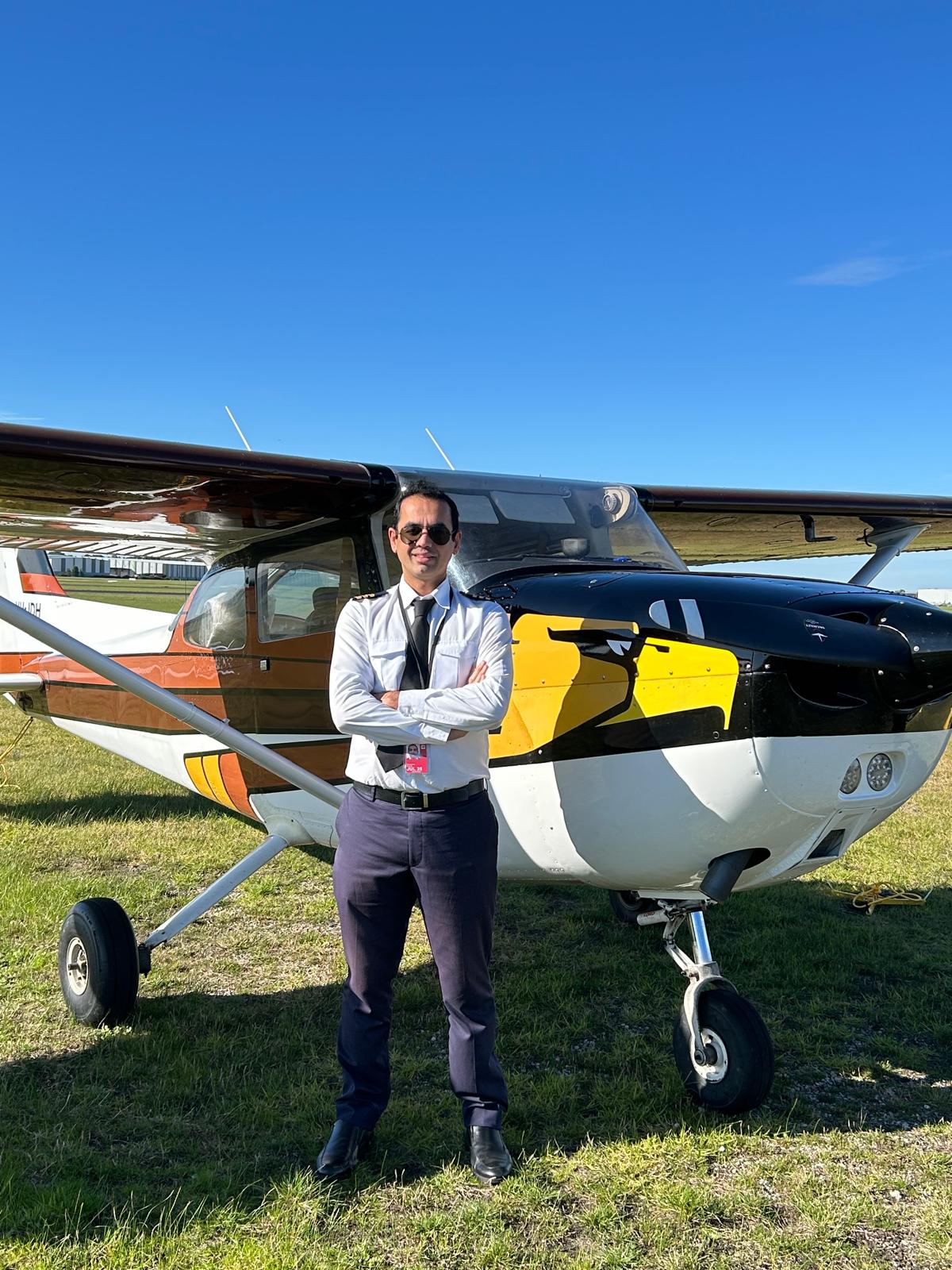
Industry forecasts and airline recruitment activity indicate strong demand for pilots across Australia and internationally. Major carriers such as Qantas, Virgin Australia and Jetstar continue to recruit pilots, while regional operators and international airlines are forecast to require significant numbers of new pilots over coming decades. For anyone who has ever looked up at a passing aircraft and wondered whether the flight deck could be their workplace, there has rarely been a better time to start.
Becoming a pilot in Australia is a structured, achievable process governed by the Civil Aviation Safety Authority (CASA). It involves a clear sequence of licences, a series of medical and theory checkpoints, and a steady accumulation of flight hours. It is also a significant investment of time and money, so understanding the full picture before you begin is the smartest first step you can take.
This guide walks through everything an aspiring pilot needs to know: the eligibility requirements, the licences and how they stack, the realistic costs and timelines, how to choose a flight school, the pathway for international students, and the career and salary prospects waiting at the end. By the time you finish reading, you’ll have a practical roadmap from your first discovery flight to the airline flight deck.
How to Become a Pilot in Australia in 7 Steps
- Meet the basic eligibility requirements (age, education, English, health).
- Obtain an Aviation Reference Number (ARN) from CASA.
- Pass an aviation medical examination (Class 1 for a commercial career, Class 2 for private flying).
- Train towards a Recreational or Private Pilot Licence (RPL/PPL) at a CASA-approved flight school, such as Goldwings Aviation Australia.
- Complete your Commercial Pilot Licence (CPL).
- Add ratings and build flight hours (multi-engine, instrument rating, instructing).
- Pursue airline qualifications, including the Air Transport Pilot Licence (ATPL).
Estimated time: 18 months to 4 years Estimated cost: AUD $80,000 to $150,000+
A quick note on the old “Student Pilot Licence”: You may have read older guides that list a Student Pilot Licence (SPL) as the first step. CASA abolished the SPL when the Part 61 licensing rules came in. Trainee pilots today simply learn under instruction at a flight school and do not need a separate student licence, though you do need a valid medical certificate (such as a Class 2, Basic Class 2, or Class 5 Self-Declaration) before your first solo flight.
What Does a Pilot Do?
“Pilot” covers a far wider range of careers than most people imagine. The licence you train towards is the same foundation, but where it takes you can look very different.
Airline pilots fly scheduled passenger services for carriers such as Qantas, Virgin Australia, Jetstar and Rex. They operate as a first officer (co-pilot) before progressing to captain, flying anything from regional turboprops to wide-body international jets.
Charter pilots fly on-demand services; corporate clients, tourists, remote communities and fly-in fly-out mining operations. Charter work is one of the most common first jobs for a freshly qualified commercial pilot.
Cargo and freight pilots move parcels, mail and freight, often overnight, for logistics operators. It’s reliable hour-building work with a clear airline pathway.
Flight instructors teach the next generation of pilots. Instructing is the single most popular way for new commercial pilots to build the experience airlines require, all while getting paid to fly.
Agricultural pilots carry out crop dusting, aerial seeding, fire-fighting and stock mustering. It’s demanding, skilled, low-level flying that pays well for those who specialise.
Corporate and private jet pilots fly executives and private owners, often in business jets, with a lifestyle and pay structure quite different from the airlines.
Requirements to Become a Pilot in Australia
Age Requirements
There is no minimum age to start learning to fly, many students begin lessons in their mid-teens, but each licence has a minimum age at which it can be issued.
| Licence | Minimum age to be issued |
| Recreational Pilot Licence (RPL) | 16 |
| Private Pilot Licence (PPL) | 17 |
| Commercial Pilot Licence (CPL) | 18 |
| Air Transport Pilot Licence (ATPL) | 21 |
Educational Requirements
You do not need a university degree to become a pilot in Australia. Most integrated commercial courses ask for the equivalent of Year 10, and many providers prefer Year 12 completion. What matters far more is aptitude in a few key subjects:
- Mathematics – for navigation, fuel planning, weight and balance, and performance calculations.
- Physics – to understand aerodynamics, engines and weather.
- English – for radio communication, exams and the legally required language standard.
If you didn’t study physics at school, don’t panic. It helps, but it isn’t a prerequisite, and flight schools teach the underlying principles from the ground up.
English Language Proficiency
Aviation operates in English worldwide. To use an aeronautical radio and conduct solo flights in Australia, you must meet the Civil Aviation Safety Authority’s (CASA) English language standards, which are divided into two distinct levels:
- General English Language Proficiency (GELP): This is the mandatory minimum standard required to fly solo and hold a Recreational Pilot Licence (RPL). It assesses everyday English communication and can often be assessed directly by your flight school’s Head of Operations.
- Aviation English Language Proficiency (AELP): This is an international standard aligned with ICAO rules. It is required if you upgrade to a Private Pilot Licence (PPL) or higher, or if you intend to fly internationally.
The AELP testing scores your professional communication proficiency on a scale from Level 4 to Level 6:
- Level 4 (Operational): The minimum international standard required for a PPL. It is valid for 3 years before requiring a retest.
- Level 5 (Extended): Demonstrates a higher tier of structural fluency and vocabulary. It is valid for 6 years.
- Level 6 (Expert): Near-native fluency and absolute operational ease. Level 6 is valid for life and never requires retesting.
International students will generally need to demonstrate English competency twice: first using a standard test (like IELTS or PTE) for their Australian student visa, and separately through CASA’s approved checkpoints for their flight training milestones.
Medical Requirements
You must hold a valid CASA medical certificate appropriate to your licence. The class you need depends on how you intend to fly:
- Class 1 Medical: Required for commercial flying (CPL and ATPL). It involves a thorough examination by a Designated Aviation Medical Examiner (DAME), including an ECG, hearing test, blood tests and an eye examination. For commercial pilots it is generally valid for 12 months.
- Class 2 Medical: Required for standard private and recreational flying (PPL/RPL). It’s a less intensive exam and is typically valid for 4 years if you are under 40, and 2 years if you are aged 40 or over.
- Basic Class 2 Medical: A popular option for Recreational Pilot Licence (RPL) students. It is assessed by any standard GP against commercial vehicle driving standards, remaining valid for 5 years if you are under 40, 2 years from ages 40–69, and 1 year from age 70. This option permits you to fly piston-engine aircraft under day VFR below 10,000 feet, carrying a maximum of 5 passengers.
- Class 5 Medical Self-Declaration: A streamlined alternative allowing pilots to self-assess online without a doctor’s visit. It features a validity period of 5 years (ages 16–39) and 2 years (ages 40–74). Note: Class 5 restricts operations to a maximum of 2 persons on board (1 pilot and 1 passenger) and a maximum aircraft weight of 2,000 kg MTOW.
Anyone considering a commercial aviation career should strongly consider obtaining a Class 1 medical before making a significant financial commitment to training. Conditions affecting vision, cardiac health or mental health history can affect eligibility, and you want to know you’ll qualify before committing tens of thousands of dollars.
Requirement comparison
| Requirement | PPL | CPL |
| Minimum age | 17 | 18 |
| Medical | Class 2 | Class 1 |
| Minimum flight hours | 40 (35 in an integrated course) | 200 (150 in an integrated course) |
Step-by-Step Guide to Becoming a Pilot in Australia
Step 1: Get an Aviation Reference Number (ARN)
Your ARN is your unique identifier with CASA, used on every application, exam result and medical record throughout your career. It’s free, applied for online through CASA’s myCASA portal, and requires proof of identity (100 points of ID).
You’ll need it before you can book a medical or sit a theory exam, so it’s genuinely the first administrative step.
Step 2: Pass Your Aviation Medical
With your ARN, register in CASA’s Medical Records System (MRS), complete the medical history questionnaire (a legal declaration – answer honestly and completely), and book an appointment with a DAME using CASA’s “Find a DAME” search. The DAME submits your results to CASA.
For a Class 1, processing can take several weeks, so don’t leave it to the last minute. A Class 1 medical for a commercial career typically costs $350–$650; a Class 2 runs around $250–$450.
Step 3: Enrol in a Flight School
Many students choose to complete their training at Moorabbin Airport in Melbourne, one of Australia’s busiest general aviation airports. Training in a controlled airspace environment exposes students to real-world radio communication, air traffic procedures and operational decision-making from an early stage, helping build confidence and practical flying skills.
| Integrated training | Modular training |
| Faster, full-time | Flexible, fit around work or study |
| Highly structured syllabus | Learn at your own pace |
| Higher upfront cost | Pay as you go |
| Run under a CASA Part 142 organisation | Often run under a CASA Part 141 organisation |
| CPL achievable with 150 minimum hours | CPL requires a minimum of 200 hours |
- Integrated courses condense the journey into an intensive program (often a CASA-approved Diploma of Aviation) and let you qualify with fewer minimum hours.
- Modular training lets you complete one licence at a time, paying as you go; ideal for career changers or anyone funding training alongside a job.
For students based in Victoria, training at Moorabbin Airport provides access to one of Australia’s busiest general aviation environments, making it a popular location for both recreational and professional pilot training.
Step 4: Earn a Private Pilot Licence (PPL)
Most aspiring professionals pass through the PPL on their way to a commercial licence, often after an RPL as an early milestone. The PPL involves three strands:
- Flight training – a minimum of 40 hours (35 in an integrated course), though most students need 55–60 hours to reach test standard.
- Theory exams – a CASA PPL exam covering seven subjects, with a pass mark of 70%.
- A flight test – a practical assessment with an approved examiner.
A PPL lets you fly single-engine aircraft privately, carry passengers under non-commercial operations (passenger limits may apply depending on your medical certificate type), and fly throughout Australia and, subject to the requirements of other countries, conduct international private flights under VFR. You cannot be paid for your piloting services.
Step 5: Obtain a Commercial Pilot Licence (CPL)
The CPL is the gateway to getting paid to fly. To be issued one you must:
- Be at least 18 and hold a Class 1 medical.
- Have the required flight hours – 200 hours through a modular (Part 141) pathway, or 150 hours through an integrated (Part 142) course. In practice, many students need 180–200 hours regardless to meet the test standard.
- Pass the required CASA CPL aeroplane theory examinations (covering subjects such as air law, navigation, meteorology, aerodynamics, human factors, performance and operations).
- Pass the CPL flight test with an approved examiner.
Step 6: Build Flight Hours
A fresh CPL rarely leads straight to an airline. You need to build experience, and there are several proven routes:
- Flight instructing – earn an instructor rating, get paid to teach, and accumulate hours quickly. By far the most common path.
- Charter operations – VFR charter, scenic and tourist flights.
- Regional airlines – entry-level first officer roles on turboprops.
- Aerial survey, mustering and agricultural work – specialised flying that builds command time.
Step 7: Pursue Airline Qualifications
Many airline pathways favour applicants who hold instrument and multi-engine qualifications, although requirements vary between operators.
- Multi-engine class rating: To fly aircraft with more than one engine.
- Instrument rating (IR): To fly in cloud and poor visibility, essential for airline operations.
- Air Transport Pilot Licence (ATPL): The pinnacle license required to act as captain of multi-crew airline aircraft. It demands extensive flight experience, at least 1,500 hours for aeroplanes (1,000 for helicopters)- alongside a demanding set of 7 theory exams.
- Airline cadet programs: Schemes run by or partnered with airlines that fast-track selected candidates from training into a first officer role, sometimes with funding support.
Pro Tip: You do not have to wait until you have 1,500 hours to take your ATPL theory. In fact, most career-minded pilots sit their 7 ATPL theory exams as soon as they complete their CPL. Under CASA rules, you must pass all 7 subjects within a 2-year window from your first sitting. Once completed, your theory passes are locked in permanently and do not expire, remaining “frozen” until you accumulate the necessary 1,500 flight hours on the job.
Types of Pilot Licences in Australia
Think of the licences as rungs on a ladder, each one unlocking more privileges.
Recreational Pilot Licence (RPL)
The entry-level licence, available from age 16. It requires around 25 hours of training, a theory exam and a flight test, and lets you fly single-engine aircraft solo. Without a navigation endorsement, you’re limited to within 25 nautical miles of your departure aerodrome.
*The RPL replaced the old Student Pilot Licence and is unique to Australia (it is not an ICAO licence).
Private Pilot Licence (PPL)
The full private licence. It lets you fly anywhere in Australia, carry up to five passengers, and fly internationally subject to local rules. It is an ICAO-recognised licence.
Commercial Pilot Licence (CPL)
The licence that lets you be paid to fly. It opens the door to charter, instructing, survey work and entry-level airline roles, and is the foundation of every professional flying career.
Air Transport Pilot Licence (ATPL)
The pinnacle licence, required to act as captain of large multi-crew airline aircraft. It demands extensive flight experience (1,500 hours for aeroplanes) and a full set of theory exams, and is usually earned while already working as an airline first officer.
Licence progression: RPL → PPL → CPL → (+ multi-engine and instrument ratings) → ATPL.
How Much Does It Cost to Become a Pilot in Australia?
Cost is the biggest hurdle for most aspiring pilots, so here’s a realistic breakdown. Figures are indicative and vary significantly between schools and locations.
| Training component | Estimated cost (AUD) |
| Medical exams (Class 1 / Class 2) | $350–$650 / $250–$450 |
| Recreational Pilot Licence (RPL) | $13,000–$15,000 |
| Private Pilot Licence (PPL) | $30,000–$33,000 |
| Theory exams and materials | $1,500–$4,000 |
| Commercial Pilot Licence (full CPL from zero) | $80,000–$130,000 |
| Instrument rating | $25,000–$45,000 |
| Multi-engine rating | $5,000–$10,000 |
| Flight test and licence issue fees | ~$200–$1,250 per test |
Factors Affecting Cost
- School location – metropolitan airports often charge more in landing and operating fees than regional ones.
- Aircraft type – newer, glass-cockpit aircraft cost more per hour than older trainers.
- Training pace – flying regularly means you retain skills and need fewer “re-learning” hours; sporadic training costs more overall.
- Additional ratings – instrument and multi-engine ratings, plus any failed-exam or re-test fees, add up.
Bottom line: Most aspiring commercial pilots spend between AUD $80,000 and $150,000+ before securing airline employment. A career package including a CPL, instrument rating and multi-engine rating commonly lands around the $150,000 mark.
It’s worth noting that some integrated diploma courses are eligible for VET Student Loans, and university aviation degrees may be covered by FEE-HELP/HECS for eligible domestic students, allowing you to defer part of the cost.
How Long Does It Take to Become a Pilot in Australia?
| Pathway | Estimated time |
| Full-time integrated training (to CPL) | 12–18 months |
| Part-time / modular training (to CPL) | 2–4 years |
| Airline-ready (CPL + ratings + hour building) | 3–5 years |
Accelerated programs run full-time, five or six days a week, and can take you from zero experience to a CPL in around 12–18 months. Part-time options spread the same training over several years, fitting around work or study. The hour-building stage – getting from a fresh CPL (around 150–200 hours) to the experience airlines want – is often the longest and most variable phase, frequently spent instructing or flying charter.
Best Flight Training Options in Australia
Choosing the right school matters enormously: it affects your cost, your job prospects and how enjoyable the journey is. Here’s a checklist of what to look for.
- CASA approval: Confirm the school holds the appropriate CASA certification (Part 141 or Part 142) for the training you want.
- Fleet quality and size: A well-maintained fleet with enough aircraft means fewer delays and less waiting for a plane.
- Instructor experience and retention: Experienced, stable instructing teams produce better-prepared graduates.
- Airline partnerships and cadet pathways: Links to airlines can lead directly to interviews and jobs.
- Graduate employment rates: Ask where recent graduates are working now. Good schools share this openly.
- Location and weather: Regions with reliable flying weather typically experience fewer training delays.
Airports such as Moorabbin Airport in Melbourne also provide exposure to controlled airspace operations, busy radio environments and diverse traffic conditions, helping students develop practical aviation skills throughout their training. - Transparent pricing: Make sure quotes include theory, exams, test fees and likely “over-syllabus” hours, not just the bare minimums.
Can International Students Become Pilots in Australia?
Yes, Australia is a popular destination for international flight training, thanks to its reliable weather, high training standards and strong English-language environment.
- Student visa: International students typically train on a Student visa (subclass 500) and must enrol in a CRICOS-registered course at an approved provider.
- English requirements: You’ll need to satisfy both visa-related English standards and CASA’s Aviation English Language Proficiency standard for radio use.
- Training costs: International student fees are often higher than domestic fees, and overseas students generally cannot access Australian government loan schemes, so you’ll need to fund training privately.
- Licence recognition overseas: The CPL and ATPL are ICAO-standard licences and can usually be converted to another country’s equivalent through that authority’s process (often involving exams and sometimes a flight test). The RPL is not an ICAO licence and is not directly recognised internationally.
Career Opportunities After Pilot Training
The flying world offers many destinations, and pay rises sharply with experience and the size of aircraft you command.
Possible career paths include regional airline pilot, major airline pilot, corporate/business jet pilot, flight instructor, charter pilot and freight pilot.
| Career stage | Typical salary range (AUD) |
| Flight instructor (entry) | $55,000–$75,000 |
| Regional first officer | $70,000–$110,000 |
| Regional captain | $140,000–$180,000 |
| Major airline first officer | $110,000–$250,000 |
| Major airline captain | $238,000–$400,000+ |
Note: Salary figures are approximate and intended as a general guide for Australia. Actual earnings vary depending on the employer, aircraft type, seniority, location, enterprise agreements, allowances, and flying hours.
Entry-level pay is modest – instructing and regional flying are about building hours as much as earning. But the trajectory is steep: a major-airline first officer can earn well into six figures, and senior captains flying international wide-body routes can exceed $400,000 a year once allowances are included. The current pilot shortage is pushing pay and hiring in candidates’ favour.
Challenges of Becoming a Pilot in Australia
It’s an extraordinary career, but it pays to go in clear-eyed about the hurdles.
- Training costs – six-figure training expenses are the single biggest barrier, and most students take on debt or self-fund.
- Competitive early hiring – the first job (the one that gets you past the chicken-and-egg “experience required” problem) can be the hardest to land, even in a strong market.
- Strict medical standards – your career depends on maintaining a Class 1 medical, which is why getting one before you train is so important.
- Ongoing certifications – flight reviews, medical renewals and recurrent training are lifelong obligations, not one-off boxes to tick.
- Lifestyle considerations – irregular rosters, early starts, time away from home and night flying are part of the job, especially in the early years.
Why Many Students Choose Moorabbin Airport for Flight Training
Moorabbin Airport is widely recognised as one of Australia’s premier locations for flight training and has helped thousands of pilots begin their aviation journey. Located approximately 20 kilometres south-east of Melbourne’s CBD, it is home to one of the country’s largest general aviation communities and provides an outstanding environment for student pilots to gain practical flying experience.
Unlike quieter regional airports, Moorabbin Airport offers students the opportunity to train in a busy, controlled airspace with multiple runways, professional air traffic control services, and a wide variety of aircraft movements throughout the day. This exposure helps students become comfortable with real-world radio communication, situational awareness, and operational decision-making from the very beginning of their training.
Student pilots also benefit from experiencing Melbourne’s diverse weather conditions, local navigation exercises over Port Phillip Bay, and cross-country flights throughout Victoria. These experiences develop confidence, adaptability, and sound airmanship while preparing students for flying in different environments across Australia.
At Goldwings Aviation, we believe learning in a dynamic operational environment produces safer, more capable pilots. The knowledge and confidence gained at Moorabbin Airport remain valuable long after students earn their pilot licence.
“If you can confidently fly at Moorabbin Airport, you’ll be well prepared to fly almost anywhere in Australia.”
Learn to Fly in Melbourne with Goldwings Aviation
Choosing the right flight school is one of the most important decisions you’ll make as a future pilot. At Goldwings Aviation, we focus on providing high-quality instruction in a supportive learning environment where every student receives personalised attention.
As a CASA Part 141-certified flight training school in Melbourne, Goldwings offers a structured, modular pathway from your first flight lesson through to a Recreational Pilot Licence (RPL), Private Pilot Licence (PPL), and beyond.
Students choose Goldwings Aviation because we offer:
- CASA Part 141 certified flight training
- Experienced and supportive flight instructors
- Personalised one-on-one instruction
- Flexible lesson scheduling around work and study
- Modern Cessna 172 training aircraft
- Competitive and transparent pricing
- Convenient location at Moorabbin Airport, Melbourne
- Clear training pathways from RPL to PPL and beyond
Our goal is not simply to help students pass a flight test, it is to develop confident, safety-focused pilots prepared for real-world flying throughout Australia.
Final Thoughts
Becoming a pilot in Australia is a serious commitment, but it is an entirely achievable one with the right structural planning. The pathway is exceptionally well-defined: meet the basic eligibility requirements, secure your CASA Aviation Reference Number (ARN), sort your aviation medical early, and choose a flight school that aligns with your personal budget. By working methodically through connected milestones like the RPL, PPL, and CPL, you can build the precise command hours and advanced ratings that modern airlines look for.
The two decisions that shape your entire trajectory are choosing between an integrated versus a modular training route, and selecting the right flight school. Confirming early that you can pass a Class 1 Medical before investing heavily in your training is critical. Get those foundational choices right, and the long-term rewards are substantial: a high-earning, in-demand career with a clear, structured progression directly to the flight deck of a major airline.
The best place to start is with concrete, practical steps. Book an appointment with a Designated Aviation Medical Examiner (DAME) to confirm your medical eligibility, and book a Trial Introductory Flight (TIF) to experience the cockpit controls firsthand. Research certified flight schools that align with your lifestyle and preferred training pace. For students looking to begin flight training in Melbourne, Goldwings Aviation Australia at Moorabbin Airport (YMMB) offers premium, personalised flight training, flexible scheduling, and affordable modular pathways from your very first hour through to advanced navigation.
Frequently Asked Questions
How much does it cost to become a pilot in Australia?
Most people spend between AUD $80,000 and $150,000+ to go from zero experience to a commercial licence with the ratings needed for an airline career. A private licence alone is far cheaper, roughly $30,000–$33,000.
How long does it take to become an airline pilot?
Reaching a CPL takes 12–18 months full-time or 2–4 years part-time. Becoming genuinely airline-ready, including ratings and hour building, usually takes 3–5 years from your first lesson.
Do I need a university degree to become a pilot?
No. A degree is not required. Most integrated commercial courses ask for around Year 10–12 schooling. A degree can help with airline applications and is necessary for some specific programs, but it isn’t a CASA requirement.
Can I become a pilot without studying physics?
Yes. Physics is helpful background but not a prerequisite. Flight schools teach the relevant aerodynamics and principles from scratch.
Is pilot training tax deductible?
It depends on your circumstances. Self-education expenses can sometimes be deductible in Australia if the training directly relates to your current income-earning work, but training undertaken to enter a new career generally is not. This is general information only, not tax advice; check with a registered tax agent or the ATO for your situation.
Can international students become commercial pilots in Australia?
Yes. International students can train for a CPL on a Student visa (subclass 500) at a CRICOS-registered provider, provided they meet English and medical requirements and can fund the training privately.
What is the minimum age to get a pilot licence?
You can be issued an RPL at 16, a PPL at 17, a CPL at 18 and an ATPL at 21. There’s no minimum age to start lessons.
Why is Moorabbin Airport a good place to learn to fly?
Moorabbin Airport provides controlled airspace, multiple runways, professional air traffic control, and a busy aviation environment that helps student pilots develop practical flying skills and confidence.
Can I start flight training with no previous experience?
Absolutely. Many of our students have never flown an aircraft before their first lesson. Our instructors will guide you through every stage of your training.
Which pilot licence should I start with?
Many students begin with a Recreational Pilot Licence (RPL) before progressing to a Private Pilot Licence (PPL). Our instructors can help you choose the pathway that best matches your goals.
How long does it take to get a pilot licence?
Training time varies depending on your availability, learning pace, and weather conditions. Students who fly consistently generally progress more efficiently.
Is Goldwings Aviation only for students living in Melbourne?
No. While many of our students come from Melbourne and surrounding suburbs, we also welcome students from across Victoria and other parts of Australia.
Where is Goldwings Aviation located?
Goldwings Aviation is located on the 1st Floor, 35 First Avenue, Moorabbin Airport, VIC 3194, approximately 20 kilometres south-east of Melbourne’s CBD. Our convenient location makes us easily accessible for students travelling from Melbourne and surrounding suburbs.
Which Melbourne suburbs do your students come from?
Goldwings Aviation Australia draws students from across Melbourne’s south-east and bayside suburbs, with areas like Moorabbin, Cheltenham, Mentone, Bentleigh, Brighton, Hampton, Sandringham, Highett, Clayton, Springvale, Keysborough, Mordialloc, St Kilda and Melbourne CBD, as well as Frankston and other regional parts of Victoria, well placed for the commute to Moorabbin Airport.
Can I visit the flight school before enrolling?
Yes. We welcome prospective students to visit Goldwings Aviation, meet our instructors, view our facilities, and discuss the best training pathway before starting.
Disclaimer: This article is general information and not a substitute for official guidance. Always confirm current requirements, costs and figures directly with CASA (casa.gov.au) and Goldwings Aviation Australia before making decisions.